
 EN
EN


In the highly competitive world of retail and e-commerce fulfillment, every cubic foot of warehouse space carries a direct cost. Businesses dealing in bedding, pillows, and sleep accessories face a particularly acute challenge: bulky foam products consume enormous amounts of storage and shipping volume relative to their actual weight. This is precisely where vacuum packed memory foam technology steps in as a genuine operational game-changer, allowing distributors and retailers to dramatically reduce the physical footprint of their inventory without compromising product integrity.

For warehouse managers and procurement specialists, understanding how vacuum packed memory foam products fit into a broader cost-reduction strategy is no longer optional — it is a fundamental part of modern logistics planning. This article explores the mechanisms, financial implications, and operational best practices that make vacuum packed memory foam one of the most warehouse-efficient product formats available today.
The Core Logic Behind Vacuum Packing Memory Foam
How the Compression Process Works
Memory foam is an open-cell viscoelastic material, meaning it contains millions of tiny air pockets that give it its characteristic cushioning and pressure-relieving properties. When subjected to mechanical compression and vacuum sealing, the air is systematically extracted from these cells, allowing the foam to collapse into a fraction of its original volume. The result is a tightly rolled or flat-packed unit sealed within a durable plastic barrier that maintains compression until the packaging is opened.
The process is entirely reversible. Once a customer opens the sealed packaging, the foam gradually re-expands to its original shape and dimensions. High-quality vacuum packed memory foam products typically reach full expansion within 24 to 72 hours, and the physical properties of the foam — its density, support rating, and surface feel — remain unchanged. This expansion behavior is a key selling point for end consumers as well as a logistical advantage for the supply chain.
For warehouse operations, what matters most is the dramatic ratio between compressed size and final product size. A standard memory foam pillow that occupies roughly 40 to 50 liters of shelf space in its natural state can be compressed into a package no larger than 3 to 5 liters. This compression ratio of up to 90% is what drives the extraordinary space savings that make vacuum packed memory foam so financially attractive to bulk inventory holders.
Product Types That Benefit Most from Vacuum Packing
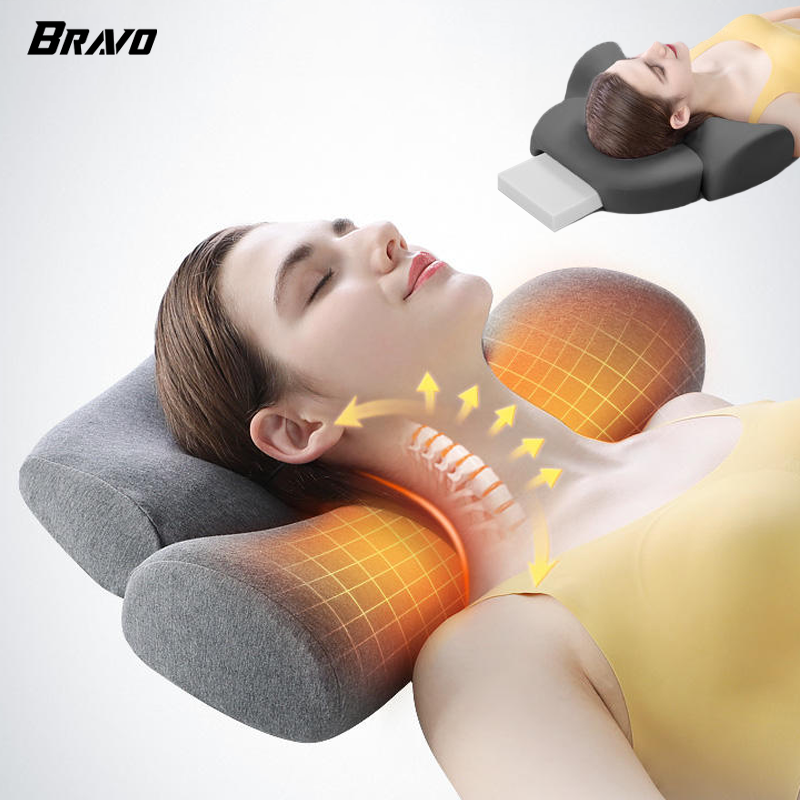
While mattresses represent the most commonly discussed application for compression technology, vacuum packed memory foam is equally transformative for pillow products. Specialty pillows — including anti-wrinkle contour pillows, neck support pillows, and side-sleeping beauty pillows — are particularly well-suited to this format because their density and cell structure respond predictably to compression without risk of permanent deformation.
Products designed for orthopedic or therapeutic use, such as those offering cervical support or facial pressure distribution, must maintain precise geometric profiles after expansion. Premium vacuum packed memory foam pillow products from reputable manufacturers are engineered with this requirement in mind, using foam grades that retain their molded contours through the compression-expansion cycle without sagging or distortion.
This means buyers do not need to choose between logistical efficiency and product quality. The same vacuum packed memory foam pillow that saves 85% of shelf space in your warehouse is the same product that delivers a premium sleep experience to the end customer — making it a genuinely win-win procurement decision.
Warehouse Space Savings: A Financial Breakdown
Calculating the Cost Per Cubic Foot Impact
Warehouse leasing and operation costs are typically calculated on a per-square-foot or per-cubic-foot annual basis. In major logistics hubs, these costs can range from a few dollars per square foot to over twenty dollars in premium locations. When you stock conventional non-compressed foam pillows, you are effectively paying premium rates to store air. Every unit that is not vacuum-packed represents wasted volume in your racking system.
Consider a practical example: if your current inventory of foam pillows occupies 500 pallet positions and you transition to vacuum packed memory foam equivalents, you could potentially consolidate that inventory into fewer than 60 pallet positions. At a conservative warehousing cost of ten dollars per pallet position per month, that single product category optimization saves nearly 44,000 dollars annually — without changing a single aspect of the product itself.
These numbers scale dramatically for high-volume distributors, seasonal inventory builds, or businesses operating in markets with expensive warehouse real estate. The financial case for vacuum packed memory foam becomes even more compelling when you factor in the opportunity cost of the freed-up storage space, which can now be used for additional SKUs or faster-moving categories.
Reducing Inbound and Outbound Freight Costs
Freight pricing in both ocean and road transportation is governed by a combination of actual weight and dimensional weight (also known as volumetric weight). For memory foam products, dimensional weight almost always dominates because the product is bulky but relatively light. By switching to vacuum packed memory foam, shippers can fit substantially more units per container, per truck, or per parcel — directly reducing the cost per unit shipped.
For ocean freight, the difference can be dramatic. A 20-foot container that previously held 200 non-compressed foam pillows might comfortably hold 1,800 to 2,000 vacuum packed memory foam units of the same product. The container cost is identical, but the cost per unit drops by a factor of nine. This improvement in freight efficiency is one of the primary reasons why major bedding importers have standardized on vacuum-packed formats across their product lines.
Last-mile delivery costs follow the same logic. Parcel carriers charge based on dimensional weight for lightweight bulky goods, and compressed pillows qualify for far lower rate brackets than their uncompressed equivalents. For direct-to-consumer operations or marketplace fulfillment models, this difference in per-shipment cost compounds rapidly across thousands of monthly orders.
Operational Efficiency and Inventory Management Benefits
Streamlining Receiving, Putaway, and Picking
Beyond pure space and freight savings, vacuum packed memory foam products offer meaningful workflow efficiencies throughout the warehouse operation. During the receiving process, compressed units are easier to handle, stack, and count than bulky foam products. Their uniform rectangular or cylindrical form factor is compatible with standard pallet configurations and racking systems, eliminating the need for custom storage solutions or oversized bin locations.
Putaway and replenishment cycles move faster when product dimensions are predictable and compact. Warehouse associates can handle more units per trip, and automated storage and retrieval systems (AS/RS) can accommodate higher unit densities per location. This operational smoothness translates into lower labor cost per unit processed — a savings stream that, while smaller than freight and space savings, adds up meaningfully over a full fiscal year.
Order picking for vacuum packed memory foam items is similarly more efficient. A picker fulfilling a multi-line order can handle several compressed pillow units in a single carry, whereas uncompressed foam pillows would require multiple trips or mechanical handling equipment for the same order volume. For high-velocity SKUs in particular, this ergonomic advantage reduces both labor hours and the risk of workplace strain injuries.
Inventory Accuracy and Damage Reduction
Cycle counting accuracy improves when products are sealed in standardized packaging formats. Vacuum packed memory foam units maintain consistent dimensions throughout their warehouse life, making visual counts and scan-based inventory audits more reliable than with uncompressed foam products, which can shift, compress under their own weight, or develop irregular profiles over time.
The sealed plastic barrier of vacuum packed memory foam also provides a degree of protection against warehouse-environment damage. Dust, moisture, pests, and incidental surface soiling — all common concerns in active warehouse environments — are effectively excluded by the vacuum seal. This reduces the shrinkage rate from storage damage, which is a meaningful cost factor for soft goods categories.
From a returns management perspective, vacuum packed memory foam items that have not been opened are straightforward to inspect and restock. The intact seal serves as a clear quality indicator, simplifying the returns triage process and increasing the proportion of returns that can be reintegrated into sellable inventory rather than written off as damaged goods.
Strategic Sourcing Considerations for Vacuum Packed Memory Foam
Evaluating Foam Quality Through the Compression Cycle
Not all memory foam products perform equally well when subjected to vacuum packing. Lower-density foams or those made with substandard cell structures may not recover fully after extended periods of compression, resulting in products that arrive at the customer undersized, lumpy, or permanently deformed. When sourcing vacuum packed memory foam products, procurement teams should prioritize suppliers who can demonstrate consistent recovery testing data and specify the maximum recommended compression duration.
For specialty products such as contoured anti-wrinkle or cervical support pillows, shape recovery is especially critical. The ergonomic geometry of these products — their contoured profiles, zonal density variations, and precise dimensions — must be preserved through compression and re-expansion. Reputable manufacturers of vacuum packed memory foam specialty pillows will have documented testing protocols that verify shape retention across multiple compression cycles.
Buyers should also evaluate the packaging film itself. The quality of the vacuum seal barrier determines how long products can remain compressed in storage without air infiltration. For warehouse environments with long inventory turn cycles, a more robust multilayer film provides greater assurance that vacuum packed memory foam products will arrive at the customer in the expected compressed state and expand properly on opening.
Aligning Supplier Capabilities with Warehouse Requirements
Efficient warehouse management of vacuum packed memory foam products also depends on supplier-side consistency. Carton dimensions, unit weights, pallet configurations, and labeling formats should all be standardized across your supplier's production runs to ensure seamless integration with your warehouse management system (WMS) and physical storage infrastructure.
Suppliers who offer consistent master carton sizing make it significantly easier to optimize pallet builds, maximize container utilization, and maintain reliable slot dimensions in racking systems. Variability in carton sizes — even minor differences of a few centimeters — can cascade into meaningful inefficiencies at scale. Establishing dimensional specifications as part of your procurement contract is a best practice for any high-volume vacuum packed memory foam program.
Lead time reliability and minimum order quantity flexibility are additional sourcing factors that affect warehouse optimization outcomes. The ability to receive more frequent, smaller replenishments of vacuum packed memory foam inventory — made feasible by the compact shipping format — supports lean inventory strategies that reduce carrying costs and minimize the risk of overstock.
FAQ
How long can vacuum packed memory foam stay compressed without losing quality?
High-quality vacuum packed memory foam products from reputable manufacturers are typically designed to remain compressed for up to 6 to 12 months without any adverse effect on foam performance or shape recovery. The specific tolerance depends on the foam density, cell structure, and the integrity of the vacuum seal. For warehouse planning purposes, it is advisable to work with your supplier to establish a recommended maximum storage duration and to align inventory turn targets accordingly.
Does vacuum packing affect the comfort or support properties of memory foam pillows?
When done correctly using appropriate foam grades and quality vacuum sealing equipment, the compression-expansion process does not degrade the comfort or support characteristics of vacuum packed memory foam pillows. The viscoelastic properties, pressure-relieving behavior, and structural density of the foam remain intact after full expansion, which typically occurs within 24 to 72 hours of opening the sealed packaging.
What are the key warehouse metrics that improve when switching to vacuum packed memory foam?
The most directly impacted metrics include storage density (units per pallet position), inbound and outbound freight cost per unit, labor hours per unit for receiving and picking, damage and shrinkage rates in storage, and inventory accuracy during cycle counts. Businesses that systematically track these metrics before and after transitioning to vacuum packed memory foam typically report significant improvements across all five areas within the first operational quarter.
Are there any products in the memory foam category that are not suitable for vacuum packing?
Most standard memory foam pillows, mattress toppers, and specialty sleep products are well-suited for vacuum packed memory foam formats. Products that may be less compatible include those with integrated rigid components such as metal frames, hard inserts, or non-compressible fill materials. Additionally, extremely low-density foams or products with decorative fabric covers that cannot withstand compression pressure without creasing or damage may require alternative packaging approaches. A qualified supplier will be able to advise on suitability for specific SKUs.
Table of Contents
- The Core Logic Behind Vacuum Packing Memory Foam
- Warehouse Space Savings: A Financial Breakdown
- Operational Efficiency and Inventory Management Benefits
- Strategic Sourcing Considerations for Vacuum Packed Memory Foam
-
FAQ
- How long can vacuum packed memory foam stay compressed without losing quality?
- Does vacuum packing affect the comfort or support properties of memory foam pillows?
- What are the key warehouse metrics that improve when switching to vacuum packed memory foam?
- Are there any products in the memory foam category that are not suitable for vacuum packing?