
 EN
EN



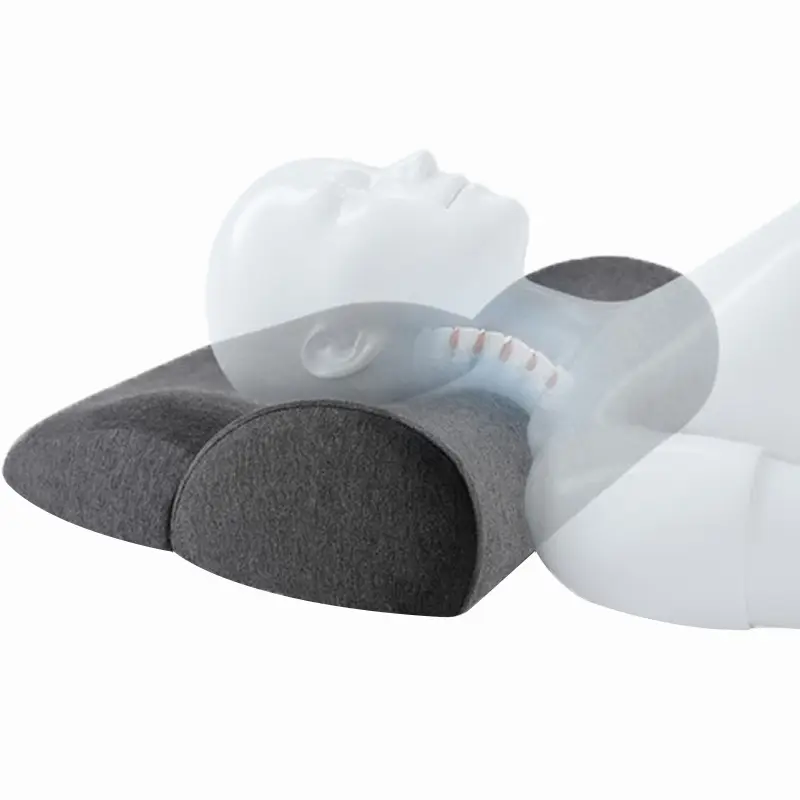
For brands, content creators, and IP license holders looking to expand into physical merchandise, the memory foam pillow category represents one of the most commercially attractive entry points in the lifestyle and wellness product space. Consumer demand for sleep and comfort products has grown steadily year over year, and co-branded or IP-themed versions of everyday comfort items — including the memory foam pillow — have shown exceptional performance in limited drops, fan merchandise stores, and B2B gifting programs. The challenge, however, is not demand. The challenge is finding a manufacturing partner willing to produce these products at low minimum order quantities without compromising on quality, customization depth, or IP integrity.
This is a real barrier that many IP holders, boutique brands, and emerging e-commerce operators run into: the traditional OEM model in the memory foam category has historically favored large-volume buyers. Factories set high MOQs to protect their tooling investments, their foam cutting workflows, and their embroidery or print setup costs. But the market has shifted. Today, low-MOQ co-branding OEM solutions for small products like the memory foam pillow are not only technically feasible — they are increasingly available from specialized manufacturers who understand the IP product economy. This article explains how that model works, what to look for, and how to evaluate whether it fits your launch strategy.
The IP Co-Branding Opportunity in Memory Foam Small Products
Why the Memory Foam Pillow Is an Ideal IP Merchandise Vehicle
Unlike apparel or print-on-demand paper goods, a memory foam pillow carries genuine functional value. When a fan or consumer buys a co-branded memory foam pillow, they are not just purchasing a collectible — they are investing in a product they will actually use, touch, and interact with daily. This creates a much higher perceived value than flat printed merchandise, and it justifies a higher retail price point for IP-licensed items. For brand owners, this means better margins on smaller production runs.
The tactile nature of a memory foam pillow also reinforces brand impressions in a way that digital content or flat packaging simply cannot. Every time a user rests their head or places the product on a sofa, the IP branding is experienced physically. This form of brand engagement is especially powerful for entertainment IPs, mascot-driven brands, and lifestyle co-branding partnerships where emotional connection is central to the consumer relationship. The memory foam pillow category thus bridges function and fandom in a commercially practical way.
The Gap Between IP Demand and Manufacturing Reality
The demand side of IP co-branded memory foam pillow products is well-established. The supply side is where complexity arises. Standard OEM factories in the foam product space are optimized for large runs — often requiring MOQs of 500 to 2,000 units per SKU. For an IP holder launching a limited character edition, a brand testing a new product line, or a B2B buyer sourcing branded gifts for a corporate event, these MOQs are economically prohibitive.
The root of this problem lies in the production structure of most foam manufacturers. Cutting molds, printing screen setups, embroidery digitization, and cover sewing templates all carry upfront costs that are traditionally amortized across large order volumes. When a factory is asked to produce 50 or 100 units of a memory foam pillow with custom IP branding, those setup costs remain nearly identical — making the per-unit cost impractically high under a conventional model. Solving this requires a fundamentally different manufacturing approach, not simply a more flexible factory.
How Low-MOQ OEM Works for Memory Foam Small Products
The Manufacturing Model That Makes Small Batches Viable
Specialized low-MOQ OEM manufacturers for the memory foam pillow category achieve small-batch viability through a combination of modular production design, shared tooling infrastructure, and flexible order aggregation. Rather than building a production line around a single large order, these factories maintain standardized foam core dimensions, pre-established cover constructions, and reusable branding modules that can be reconfigured quickly between orders. This dramatically reduces the per-order setup cost that would otherwise make a small-batch memory foam pillow run economically unworkable.
In practical terms, this means a brand ordering as few as 100 units of a co-branded memory foam pillow can receive a product with custom cover fabric, embroidered or woven IP art, branded labeling, and retail-ready packaging — without absorbing the full tooling and setup overhead of a mass production run. The factory achieves efficiency by treating each small order as a modular build rather than a bespoke project, drawing on standardized components while customizing the branding layer to each client's IP requirements.
What Customization Is Actually Available at Low MOQ
One of the most common misconceptions about low-MOQ production is that reduced order quantities come with reduced customization options. In a well-structured low-MOQ OEM program for the memory foam pillow category, this is not the case. Customization typically spans cover material selection, foam density specification, external shape and size, IP print or embroidery placement, label and hangtag design, and retail or gift-box packaging. Each of these layers can be adapted to IP branding requirements without requiring full tooling investment.
For IP co-branding specifically, embroidery and woven label application are particularly valuable because they convey premium quality and are resistant to washing and wear — important for a memory foam pillow that will be used regularly. Heat transfer printing and sublimation on the cover fabric are also viable for designs with complex color gradients or detailed character art. A capable low-MOQ OEM partner will offer technical guidance on which branding method best fits the IP artwork and the intended product use context.

Evaluating a Low-MOQ OEM Partner for IP Co-Branded Memory Foam Products
Key Criteria Beyond Price Per Unit
When evaluating a factory for co-branded memory foam pillow production at low MOQ, price per unit is only one dimension of the decision. More important for IP-driven projects are IP confidentiality protocols, sample turnaround capability, branding fidelity standards, and the factory's experience working within licensing agreement constraints. IP holders need assurance that their character assets, logos, and brand guidelines will be handled with confidentiality and precision — not simply passed through a generic print workflow.
Sample quality and speed matter enormously in IP product launches. A co-branded memory foam pillow line often needs to go through IP licensor approval before production proceeds. This means the factory must be able to produce accurate pre-production samples quickly and cost-effectively, reflecting the actual production standard rather than a showroom-quality prototype that diverges from the batch output. Factories that specialize in low-MOQ IP merchandise understand this requirement and build approval sample workflows into their standard process.
Questions to Ask Before Committing to a Production Partner
Before placing an order for a co-branded memory foam pillow with any low-MOQ OEM partner, it is worth clarifying several operational details. Understanding whether the factory has existing foam grade certifications — such as CertiPUR-US or OEKO-TEX — is critical if the product will be sold in regulated retail channels or to corporate buyers with compliance requirements. Knowing whether the factory holds brand-specific tooling exclusively or shares it across clients affects IP security in ways that are often overlooked until a problem arises.
It is also worth understanding the factory's reorder flexibility. For an IP product line, initial runs are often test volumes, and rapid reorders at the same small-batch scale must be possible without renegotiating the entire setup. A factory that treats each small order as a new project from scratch will create friction that undermines the speed-to-market advantage that low-MOQ production is supposed to provide. Look for partners whose memory foam pillow production systems are explicitly designed for iterative, repeat small-batch fulfillment rather than adapted from a high-volume model.
Launch Strategy for IP Co-Branded Memory Foam Small Products
Aligning Product Design with IP Brand Guidelines
A successful IP co-branded memory foam pillow launch begins well before factory engagement, at the product concept and design alignment stage. IP licensors typically have strict brand guidelines covering color accuracy, artwork scaling, placement zones, and prohibited design modifications. Working with a factory that has handled IP-licensed products before means the technical production team already understands how to translate brand guidelines into manufacturing specifications — a capability that saves significant revision cycles and prevents licensor rejections during the approval process.
The physical form of the memory foam pillow itself should also reflect the IP's aesthetic identity. A character IP with a rounded, soft visual language calls for a different shape and material specification than a minimalist lifestyle brand. Low-MOQ factories with experience in IP merchandise can advise on how foam cutting, cover construction, and finishing choices can be adjusted to reinforce the IP's visual tone — making the product feel like an authentic extension of the IP world rather than a generic item with a logo printed on it.
Pricing, Positioning, and Sales Channel Fit
The economics of a low-MOQ co-branded memory foam pillow launch are fundamentally different from mass-market product economics. Higher per-unit costs in small batches must be offset by premium retail positioning, limited-edition scarcity marketing, or B2B gifting applications where per-unit cost sensitivity is lower than in direct consumer retail. Understanding which sales channel is appropriate for the product concept is essential before setting the production volume and pricing structure.
For e-commerce and fan merchandise drops, limited-quantity positioning actually supports higher pricing. A co-branded memory foam pillow produced in a run of 200 units with numbered packaging or a certificate of authenticity can command a retail price several times higher than a commodity foam pillow. This model turns the low-MOQ constraint into a marketing asset. For corporate gifting and event merchandise, the memory foam pillow format works well as a premium branded gift that recipients actually keep and use, generating sustained brand impressions in a way disposable gift items cannot.
FAQ
What is the typical minimum order quantity for a co-branded memory foam pillow from a low-MOQ OEM factory?
MOQ thresholds vary by factory and customization level, but specialized low-MOQ OEM manufacturers in the memory foam pillow category commonly work with order quantities starting from 50 to 200 units per SKU. The exact threshold depends on the degree of custom tooling required, the branding method chosen, and whether the foam core is a standard or custom-cut specification. For IP co-branding projects, some factories offer tiered pricing structures that allow initial sample and test runs at very low quantities before scaling to larger repeat orders.
Can a factory produce a memory foam pillow with complex IP character art at small batch volumes?
Yes, provided the factory has the appropriate printing and embroidery capabilities and experience handling IP licensing requirements. Complex character art is typically reproduced through sublimation printing on the cover fabric or through embroidery for simpler but premium-feel applications. A capable low-MOQ OEM partner will review the IP artwork files and recommend the most suitable technique for the specific design. Pre-production samples are essential in these cases to confirm color fidelity and detail accuracy before the batch is produced.
How do I protect my IP when working with an OEM factory on a memory foam pillow project?
IP protection in OEM production starts with a well-structured non-disclosure and non-compete agreement that explicitly covers artwork, branding assets, and product design files. For a memory foam pillow project, this should include provisions about who holds the custom tooling or molds, how digital files are stored and destroyed after production, and whether the factory has any rights to use your branding for marketing purposes. Working with a factory that has an established process for IP-licensed manufacturing — including documented confidentiality protocols — reduces risk significantly compared to working with a general-purpose manufacturer.
What certifications should a memory foam pillow meet for retail and B2B gifting channels?
For consumer retail, particularly in North American and European markets, the memory foam pillow foam material should ideally carry CertiPUR-US or OEKO-TEX Standard 100 certification to confirm the absence of harmful chemicals. Cover fabric should meet applicable flammability and material safety standards for the target market. For B2B corporate gifting, buyers often require documentation of compliance with relevant import regulations and product safety standards. Confirming certification status before placing an order avoids costly surprises during customs clearance or retailer compliance audits.
Table of Contents
- The IP Co-Branding Opportunity in Memory Foam Small Products
- How Low-MOQ OEM Works for Memory Foam Small Products
- Evaluating a Low-MOQ OEM Partner for IP Co-Branded Memory Foam Products
- Launch Strategy for IP Co-Branded Memory Foam Small Products
-
FAQ
- What is the typical minimum order quantity for a co-branded memory foam pillow from a low-MOQ OEM factory?
- Can a factory produce a memory foam pillow with complex IP character art at small batch volumes?
- How do I protect my IP when working with an OEM factory on a memory foam pillow project?
- What certifications should a memory foam pillow meet for retail and B2B gifting channels?